

How reliable are the D - Dimer Rapid Test kits on the market?
May 23, 2025
Leave a message
Hey there! As a supplier of D - Dimer Rapid Test kits, I've been getting a ton of questions lately about how reliable these kits really are. So, I thought I'd take some time to break it down for you all.
First off, let's talk about what D - Dimer is. D - Dimer is a protein fragment that's produced when a blood clot breaks down in your body. Normally, there's a very small amount of D - Dimer in your blood. But when there's excessive clot formation and breakdown, like in conditions such as deep vein thrombosis (DVT), pulmonary embolism (PE), or disseminated intravascular coagulation (DIC), the level of D - Dimer in your blood goes up.
The D - Dimer Rapid Test kits on the market are designed to quickly detect the presence of D - Dimer in a patient's blood sample. They're pretty convenient, as they can give you results in a matter of minutes, usually within 15 - 20 minutes. This is a huge advantage, especially in emergency situations where time is of the essence.
Now, the big question is, how reliable are these kits? Well, the reliability of a D - Dimer Rapid Test kit depends on several factors.
Sensitivity and Specificity
One of the key measures of a test's reliability is its sensitivity and specificity. Sensitivity refers to the test's ability to correctly identify those with the condition. In the case of D - Dimer tests, a highly sensitive test will be able to detect even small increases in D - Dimer levels, which is great for ruling out conditions like DVT or PE. If the test comes back negative and it has high sensitivity, it's very likely that the patient doesn't have the condition.
On the other hand, specificity is about the test's ability to correctly identify those without the condition. A highly specific test will rarely give a false - positive result. However, most D - Dimer Rapid Test kits on the market tend to have high sensitivity but relatively lower specificity. This means that while they're good at detecting when there might be a problem, they can also give false - positive results.
For example, other factors besides DVT or PE can cause an increase in D - Dimer levels. These include age (older people tend to have higher D - Dimer levels), pregnancy, recent surgery, inflammation, and cancer. So, if a patient has one of these conditions, the D - Dimer Rapid Test might show a positive result even if they don't have a blood clot.
Quality of the Kit
Another important factor is the quality of the D - Dimer Rapid Test kit itself. There are many different brands and manufacturers out there, and not all of them are created equal. Some kits use higher - quality reagents and have better manufacturing processes, which can lead to more accurate results.
As a supplier, I've done my due diligence in sourcing the best - quality D - Dimer Rapid Test kits. We work with reputable manufacturers who follow strict quality control standards. This helps to ensure that the kits we offer are as reliable as possible.
User Error
Believe it or not, user error can also play a big role in the reliability of the test results. If the test isn't performed correctly, the results might not be accurate. For example, if the blood sample isn't collected properly, or if the test is read at the wrong time, it can lead to false results.
That's why it's so important to provide clear instructions with the D - Dimer Rapid Test kits. We make sure that our customers receive detailed guides on how to perform the test correctly, from sample collection to result interpretation.
Comparison with Other Cardiac Marker Tests
It's also worth comparing the D - Dimer Rapid Test with other cardiac marker tests on the market. For instance, the Cardiac Troponin I Rapid Test Cassette is used to detect damage to the heart muscle. Troponin is a protein that's released into the blood when the heart muscle is injured, such as during a heart attack. The Cardiac Troponin I test is highly specific for heart damage, but it takes longer to show up in the blood compared to D - Dimer.
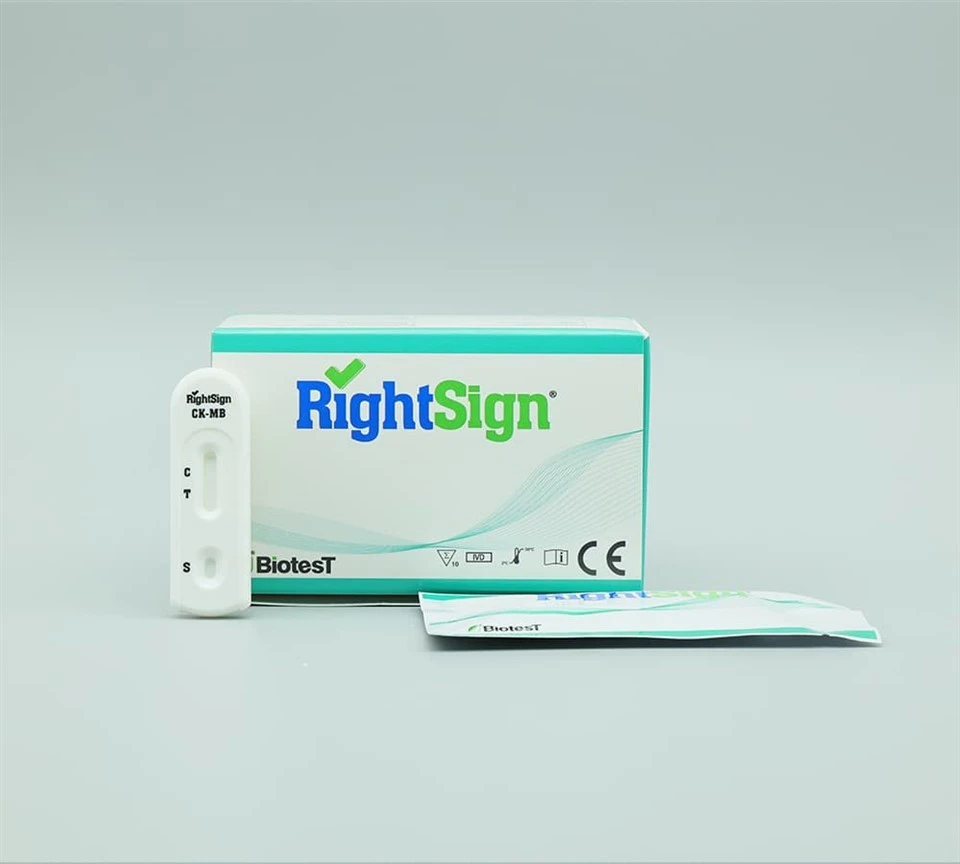
The CKMB Rapid Test is another cardiac marker test. CKMB is an enzyme found mainly in the heart muscle. Elevated levels of CKMB can indicate heart damage. Similar to Troponin, it also has a relatively high specificity for heart - related issues.
And then there's the H - FABP Rapid Test Cassette. H - FABP is a protein that's released quickly after heart muscle injury. It can be detected earlier than Troponin and CKMB in some cases.
While these tests are all useful in different ways, the D - Dimer Rapid Test is unique in that it's mainly focused on detecting blood clot - related issues rather than direct heart muscle damage.
Real - World Applications
In real - world clinical settings, D - Dimer Rapid Test kits are often used as an initial screening tool. If a patient presents with symptoms that might suggest DVT or PE, such as leg pain, swelling, or shortness of breath, a D - Dimer test can be done quickly to see if there's an elevated level of D - Dimer in their blood.

If the test comes back negative, it can be a good indication that the patient doesn't have a blood clot, and further, more invasive tests might not be necessary. However, if the test is positive, it doesn't necessarily mean that the patient has a blood clot. In these cases, additional tests, such as ultrasound or CT scans, are usually required to confirm the diagnosis.
Our Commitment to Quality
As a supplier, we're committed to providing high - quality D - Dimer Rapid Test kits. We understand the importance of accurate test results in healthcare, and we work hard to ensure that our customers can rely on the products we offer.
We're also constantly researching and evaluating new products on the market to see if there are any improvements in terms of reliability and accuracy. If we find a better - performing kit, we'll make it available to our customers.
Wrapping Up
So, to answer the question of how reliable the D - Dimer Rapid Test kits on the market are, it's a bit of a mixed bag. They're a valuable tool, especially for quick screening, but they do have their limitations. Their high sensitivity makes them great for ruling out conditions, but their lower specificity means that false - positive results can occur.
However, by choosing a high - quality kit, following the correct testing procedures, and using the test in conjunction with other diagnostic methods, the reliability of the D - Dimer Rapid Test can be maximized.
If you're interested in purchasing D - Dimer Rapid Test kits for your healthcare facility or practice, we'd love to have a chat with you. We can provide you with more information about our products, answer any questions you might have, and discuss pricing and ordering details.
References
- Favaloro, E. J., Lippi, G., & Mattiuzzi, C. (2011). Diagnostic accuracy of D - dimer in the diagnosis of venous thromboembolism: a systematic review. Clinical Chemistry and Laboratory Medicine, 49(11), 1729 - 1740.
- Kline, J. A., Courtney, D. M., Raskob, G. E., et al. (2004). Clinical criteria to prevent unnecessary diagnostic testing in emergency department patients with suspected pulmonary embolism. Journal of Thrombosis and Haemostasis, 2(9), 1543 - 1549.