

Is the HEV IgM Rapid Test affected by other diseases or medications?
Jan 01, 2026
Leave a message
Hey there! As a supplier of the HEV IgM Rapid Test, I often get asked a bunch of questions about how accurate it is and if other factors can mess with the results. So, I thought I'd break it down and share some insights on whether the HEV IgM Rapid Test is affected by other diseases or medications.
First off, let's talk a bit about what the HEV IgM Rapid Test is. The HEV IgM Rapid Test is a convenient and quick way to detect IgM antibodies against the Hepatitis E virus (HEV) in a patient's blood. It's super useful in both clinical and field settings because it gives results in a relatively short time, which helps in making timely decisions about treatment and isolation.
Now, the big question: Can other diseases throw off the results of this test? Well, in general, the test is designed to be pretty specific to HEV IgM antibodies. But there are some scenarios where things might get a bit tricky.
Autoimmune diseases are one area of concern. Conditions like lupus or rheumatoid arthritis can cause the immune system to go haywire and produce a whole bunch of antibodies. These extra antibodies could potentially cross - react with the antigens used in the HEV IgM Rapid Test. In some rare cases, this might lead to a false - positive result, where the test says there are HEV IgM antibodies when there really aren't. However, it's important to note that this doesn't happen very often, and further confirmatory tests can usually sort things out.
Some viral infections could also potentially cause interference. For example, if a patient has recently had another hepatitis virus infection, say Hepatitis A or B, their immune system might be in an activated state. There could be some overlapping immune responses, and in theory, this could affect the test. But again, the test is engineered to distinguish between different types of hepatitis viruses as much as possible.
Bacterial infections are less likely to directly affect the HEV IgM Rapid Test. The antibodies produced in response to bacteria are usually very different from those targeted by the HEV test. However, if a patient has a severe, long - standing bacterial infection that has caused a lot of systemic inflammation, it might have some indirect effects on the immune system. But this is more of a stretch and hasn't been well - documented as a major cause of inaccurate HEV IgM test results.
Parasitic infections could be another consideration. Although there's no real biological reason for a parasite to cause the production of HEV - specific IgM antibodies, the immune system's response to parasites might be complex. For instance, Giardia Iamblia Rapid Test is used to detect a common intestinal parasite. In some cases where a patient has a heavy parasitic load and a highly active immune response, it's possible that there could be some minor cross - reactions. But like with other non - HEV factors, these are more theoretical and not very common.
Now, let's move on to medications. There are a few types of medications that could potentially have an impact on the HEV IgM Rapid Test results.
Immunosuppressant drugs are a major concern. These are drugs like corticosteroids and some chemotherapy agents that are used to suppress the immune system. If a patient is taking high doses of these drugs, their ability to produce antibodies might be impaired. This means that even if they have an active HEV infection, the test might not detect the IgM antibodies because the immune system isn't making enough of them. So, a false - negative result is possible.
Antibiotics, on the other hand, are unlikely to have a direct effect on the HEV IgM Rapid Test. Antibiotics are designed to target bacteria, and they don't usually interact with the immune response related to viral infections. However, if an antibiotic causes an allergic reaction or some other type of unexpected immune response in a patient, that could potentially lead to some strange test results. But this would be extremely rare.
There are also vaccines. Vaccines work by stimulating the immune system to produce antibodies. If a patient has recently received a vaccine, it could cause a temporary boost in their immune activity. But in most cases, vaccines are specific to the pathogen they're designed to protect against. For example, the H.pylori Antibody Rapid Test is for detecting antibodies against Helicobacter pylori. A vaccine for H. pylori wouldn't be expected to cause the production of HEV IgM antibodies. However, there could be some non - specific immune activation that might, in a very rare situation, cause a blip in the test results.
It's important to keep in mind that while all these factors are possible sources of interference, the HEV IgM Rapid Test has gone through a lot of testing to minimize the chances of inaccurate results. But in a clinical setting, it's always a good idea to consider a patient's medical history, including any other diseases they might have and medications they're taking. This can help doctors and healthcare providers interpret the test results more accurately.
If you're in the medical field or involved in disease testing, you know how crucial it is to have reliable tests. Our HEV IgM Rapid Test is designed with the latest technology to provide fast and accurate results. Whether you're running a small clinic or a large - scale laboratory, our test can be a valuable addition to your diagnostic arsenal.

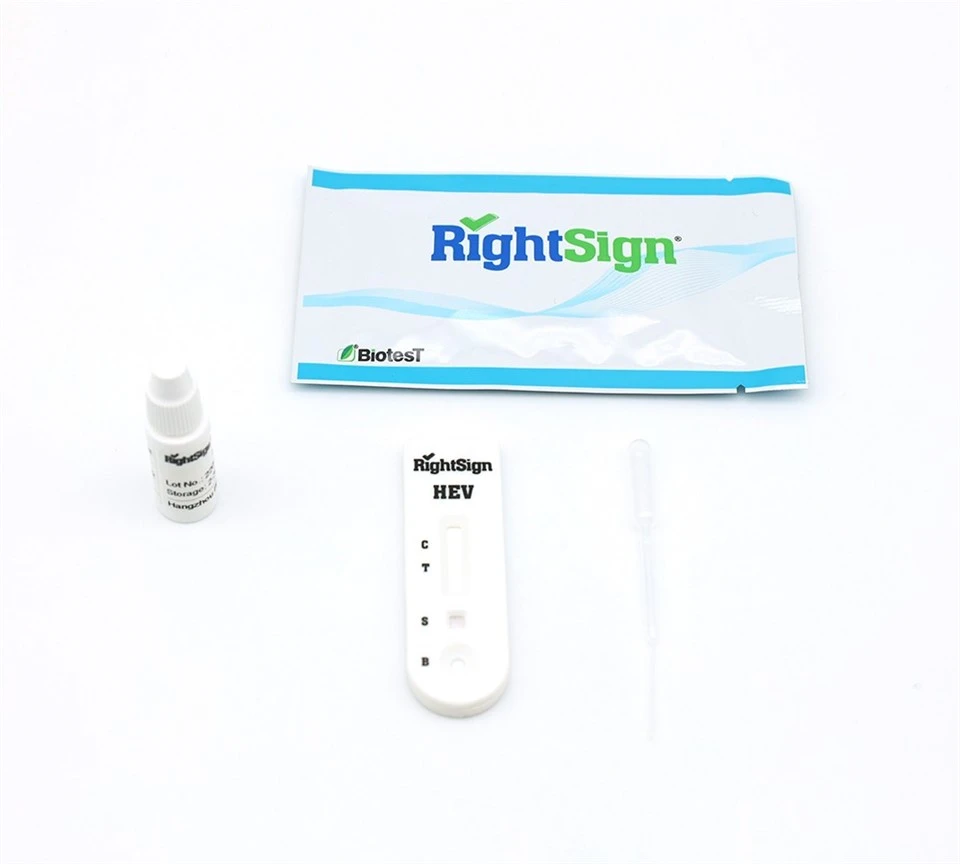
If you're interested in learning more about our HEV IgM Rapid Test or discussing a potential purchase, don't hesitate to reach out. We're always happy to talk about how our products can meet your needs and help you provide the best care to your patients.
References
- Standard guidelines for Hepatitis E virus testing from international health organizations.
- Research papers on the cross - reactivity of HEV IgM tests in patients with other medical conditions.
- Manufacturer's documentation for the HEV IgM Rapid Test.