

Can the NT - proBNP Rapid Test be used in patients with congenital heart disease?
Jan 08, 2026
Leave a message
Hey there! As a supplier of NT - proBNP Rapid Tests, I often get asked whether this test can be used in patients with congenital heart disease. Let's dig into this topic and explore the ins and outs.
First off, let's understand what NT - proBNP is all about. NT - proBNP, or N - terminal pro - B - type natriuretic peptide, is a hormone that the heart releases when it's under stress. It's a pretty handy biomarker for detecting heart problems. When the heart has to work harder due to conditions like heart failure or other cardiac issues, it pumps out more NT - proBNP, and we can measure its levels in the blood.
Now, congenital heart disease is a whole different kettle of fish. It's a term that covers a wide range of heart abnormalities that a person is born with. These can include issues with the heart's structure, such as holes in the heart, abnormal valves, or problems with the blood vessels connected to the heart. The symptoms and severity of congenital heart disease can vary widely from one person to another. Some might have mild conditions that don't cause many problems, while others could face severe heart failure from a young age.
So, can the NT - proBNP Rapid Test be useful for these patients? Well, there are a few reasons why it could be a great tool.
One major advantage is that it's quick. In a clinical setting, time is of the essence, especially when dealing with patients who have congenital heart disease. The rapid test can provide results in a matter of minutes. This is crucial because doctors need to make fast decisions about the patient's treatment. For example, if a patient with congenital heart disease comes in with sudden trouble breathing, doctors can use the NT - proBNP Rapid Test to quickly determine if the heart is under stress. This information can help them figure out if the patient needs immediate treatment, like medications to reduce the workload on the heart.
Another benefit is its simplicity. The NT - proBNP Rapid Test is relatively easy to perform. It doesn't require a big, fancy lab setup. All you need is a small blood sample, usually taken from a finger prick. This makes it accessible in different healthcare settings, whether it's a big hospital or a rural clinic. For patients with congenital heart disease who might need regular monitoring, this simplicity is a godsend. They don't have to go through the hassle of long - waiting periods at a specialized lab just to get their NT - proBNP levels checked.
But, like any medical test, it's not without its limitations. One issue is that in patients with congenital heart disease, other factors can also affect NT - proBNP levels. For instance, some congenital heart conditions can cause long - term changes in the heart's structure and function. These changes might lead to consistently elevated NT - proBNP levels, even when the patient is stable. So, doctors need to be careful when interpreting the results. They can't just rely on the test alone; they have to consider the patient's overall medical history, symptoms, and other test results.

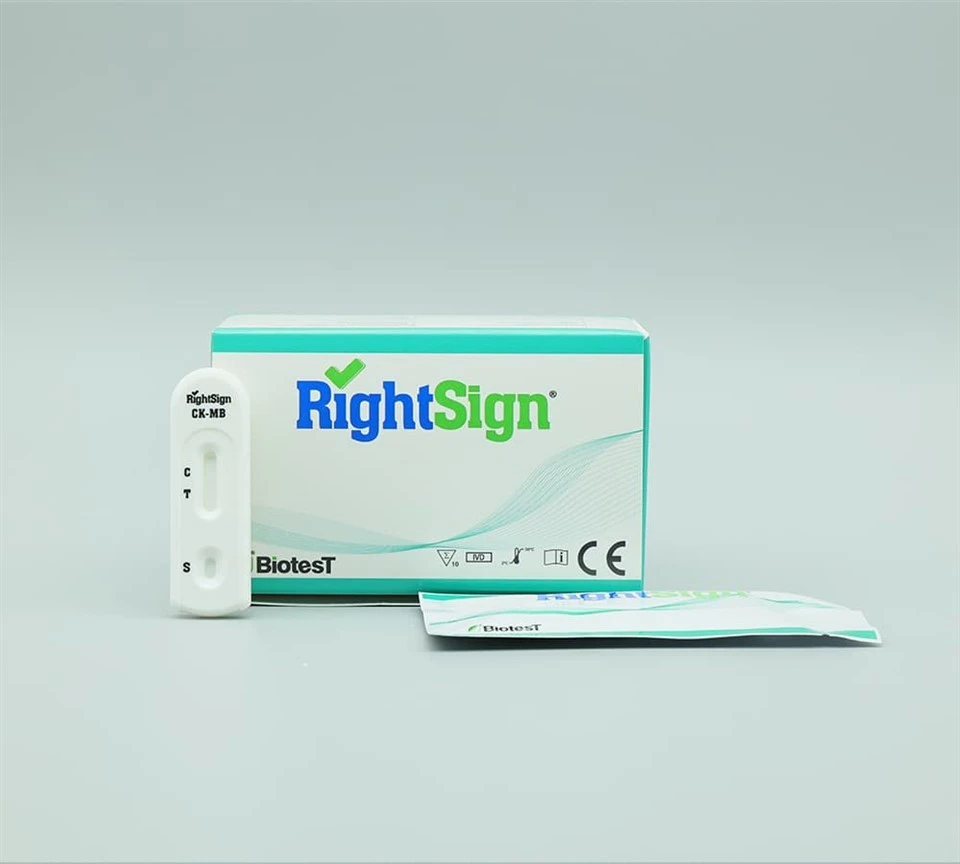
Also, the normal range of NT - proBNP might be different for patients with congenital heart disease compared to the general population. What's considered a normal level in a healthy person might be completely off for someone with a congenital heart defect. This means that doctors have to use different reference values when evaluating the results of the NT - proBNP Rapid Test in these patients.
In addition to the NT - proBNP Rapid Test, there are other cardiac marker tests that can be used in conjunction with it. For example, you can check out the CKMB Rapid Test. CKMB, or creatine kinase - MB, is another biomarker that can indicate heart muscle damage. When used together with the NT - proBNP Rapid Test, it can give doctors a more comprehensive picture of a patient's heart health.
The D - Dimer Rapid Test is also worth mentioning. D - dimer is a protein fragment that's produced when blood clots break down. In patients with congenital heart disease, there's an increased risk of blood clots forming. So, measuring D - dimer levels can help doctors detect potential clotting problems.
And then there's the H - FABP Rapid Test Cassette. H - FABP, or heart - type fatty acid - binding protein, is released into the bloodstream when the heart muscle is damaged. It can be a useful marker in the early stages of a heart problem.
In conclusion, the NT - proBNP Rapid Test can definitely be used in patients with congenital heart disease. It offers a quick and simple way to get important information about the heart's stress levels. However, it's not a one - size - fits - all solution. Doctors need to use it in combination with other tests and take into account the patient's unique medical situation.
If you're in the medical field and are interested in purchasing our NT - proBNP Rapid Tests or any of our other cardiac marker tests, I'd love to have a chat with you. We're always looking to work with healthcare providers to improve patient care. Reach out to us to start a discussion about how our products can meet your needs.
References
- Braunwald E, Zipes DP, Libby P. Heart Disease: A Textbook of Cardiovascular Medicine. Elsevier; 2019.
- Hoffman JI, Kaplan S. The incidence of congenital heart disease. J Am Coll Cardiol. 2002;39(12):1890 - 1900.
- Maisel AS, Krishnaswamy P, Nowak RM, et al. Rapid measurement of B - type natriuretic peptide in the emergency diagnosis of heart failure. N Engl J Med. 2002;347(3):161 - 167.