

What is the role of NT - proBNP in cardiac marker tests?
Jan 08, 2026
Leave a message
Hey there! As a supplier in the cardiac marker tests field, I've seen firsthand how crucial these tests are in diagnosing and managing heart - related conditions. Today, I want to dig deep into the role of NT - proBNP in cardiac marker tests.
First off, let's get a basic understanding of what NT - proBNP is. NT - proBNP stands for N - terminal pro - brain natriuretic peptide. It's a by - product that gets released into the bloodstream when the heart is under stress, especially when there's increased pressure or stretching in the heart chambers. You see, the heart is like a well - oiled machine. When it starts to face problems, like heart failure or other cardiac issues, it sends out signals. NT - proBNP is one of those important signals.
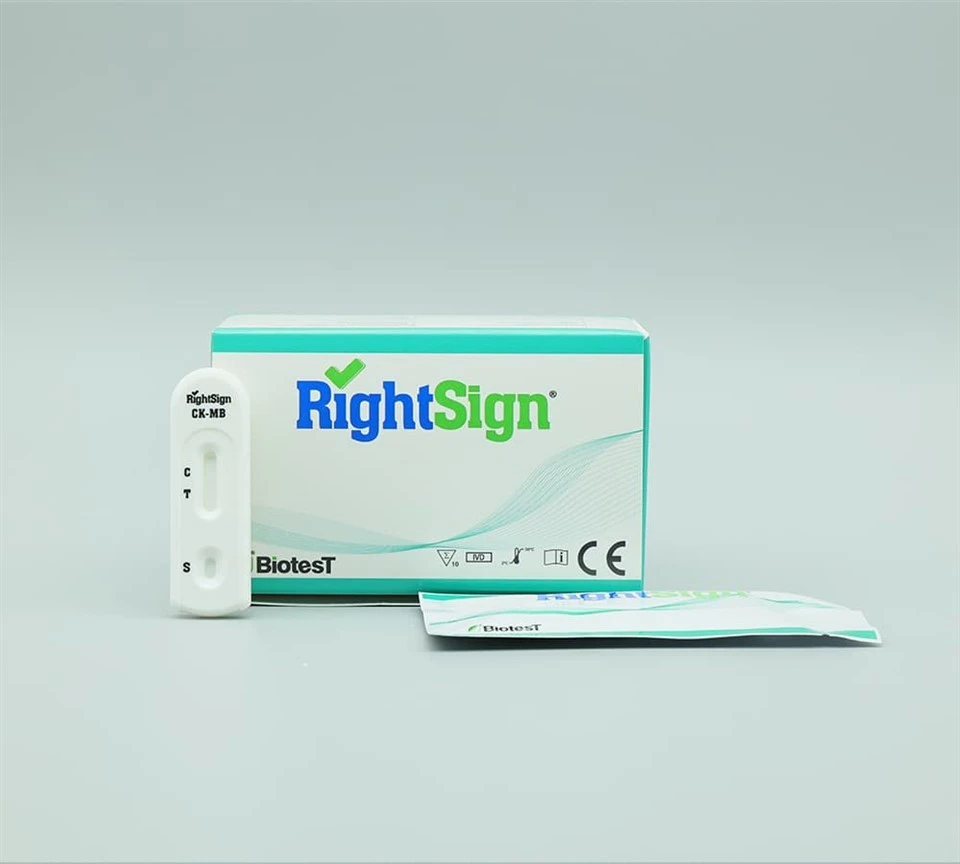

Now, why is NT - proBNP so important in cardiac marker tests? Well, it's a super useful tool for doctors to assess the severity of heart failure. When a patient comes in with symptoms like shortness of breath, fatigue, or swelling in the legs, doctors can't always tell right away if it's due to heart failure or something else. That's where NT - proBNP comes in. A high level of NT - proBNP in the blood can indicate that the heart is working harder than it should be, and there's a good chance of heart failure.
Let's talk numbers for a bit. In a healthy person, the NT - proBNP levels are usually pretty low. But as the heart's condition worsens, these levels can shoot up. For example, in patients with acute heart failure, NT - proBNP levels can be several times higher than the normal range. This helps doctors not only diagnose heart failure but also figure out how severe it is. If the levels are extremely high, it might mean that the patient is in a more critical condition and needs immediate treatment.
Another great thing about NT - proBNP is that it can be used to monitor the progress of heart failure treatment. After a patient starts taking medications or undergoes other treatments for heart failure, doctors can keep an eye on their NT - proBNP levels. If the levels start to go down, it's a good sign that the treatment is working. On the other hand, if the levels stay high or keep rising, it might mean that the current treatment isn't effective, and the doctor needs to adjust the treatment plan.
But NT - proBNP isn't just useful for heart failure. It can also play a role in other cardiac conditions. For instance, in patients with acute coronary syndrome, which includes heart attacks and unstable angina, elevated NT - proBNP levels can be a sign of poor prognosis. It can help doctors identify patients who are at a higher risk of complications and need more aggressive treatment.
Now, let's compare NT - proBNP with some other cardiac markers that we offer as a supplier. We have the D - Dimer Rapid Test. D - dimer is a protein fragment that's formed when a blood clot breaks down. It's mainly used to rule out deep vein thrombosis (DVT) and pulmonary embolism. While NT - proBNP is focused on the heart's function, D - dimer is more about blood clotting. So, they serve different but complementary purposes in diagnosing various medical conditions.
Then there's the CKMB Rapid Test. CKMB stands for creatine kinase - MB. It's an enzyme that's found mainly in the heart muscle. When there's damage to the heart muscle, like during a heart attack, CKMB levels in the blood increase. NT - proBNP and CKMB can work together. CKMB can help diagnose a heart attack, while NT - proBNP can give an idea about the overall heart function and the severity of the condition.
And we also have CRP Readings Blood Tests. CRP, or C - reactive protein, is a marker of inflammation in the body. In the context of cardiac health, elevated CRP levels can be associated with an increased risk of heart disease. NT - proBNP and CRP can both be used to assess a patient's cardiac risk, but they look at different aspects. NT - proBNP is related to the heart's mechanical stress, while CRP is about inflammation.
As a supplier of cardiac marker tests, we understand the importance of providing accurate and reliable tests. Our NT - proBNP tests are designed to give quick and precise results. We know that in a clinical setting, time is of the essence. Doctors need to make decisions fast, and having accurate NT - proBNP results can make a huge difference in patient care.
We also offer support to our customers. Whether you're a small clinic or a large hospital, we're here to help you understand how to use our tests effectively. We can provide training on how to perform the tests correctly and how to interpret the results.
If you're in the market for high - quality cardiac marker tests, including NT - proBNP tests, we'd love to talk to you. We're always looking for new partners to work with. Whether you're interested in purchasing our tests for your medical facility or want to distribute them in your region, we're open to discussion. Contact us to start a conversation about how we can meet your needs and improve patient outcomes together.
References
- Maisel AS, Krishnaswamy P, Nowak RM, et al. Rapid measurement of B - type natriuretic peptide in the emergency diagnosis of heart failure. N Engl J Med. 2002;347(3):161 - 167.
- Januzzi JL Jr, Troughton RW, Anand IS, et al. NT - proBNP testing for diagnosis and short - term prognosis in acute destabilized heart failure: an international pooled analysis of 1256 patients. Eur Heart J. 2006;27(3):330 - 337.
- McCullough PA, Nowak RM, McCord J, et al. B - type natriuretic peptide and clinical judgment in emergency diagnosis of heart failure: analysis from Breathing Not Properly (BNP) Multinational Study. Circulation. 2002;106(4):416 - 422.